
Alko is a different kind of shop, which is given a specific task by law to sell alcoholic beverages and reduce the harm caused by alcoholic beverages. Alko aims to provide its customers with world-class customer service, promote well-being and healthy lifestyles in Finland and lead the way in both customer experience and responsible alcohol sales. Priima learning platform supports the training of alcoholics towards these goals.
Alko wanted to improve its approach to developing the skills of its staff. A service design process was started to identify the ways of development and the needs for a digital learning environment, including consultation with internal stakeholders and customers. A comprehensive understanding of the types of learners and learning spaces that exist in Alko was created.
Service design workshops and participation supported the definition and deployment of the e-learning platform
In 2020, in collaboration with Saarni Learning, the work started to define the background for an online learning platform to support this, with workshops on different themes and teams even exploring the store infrastructure to ensure the online environment supports all types of learning.
“Our cooperation has shown that Alko wants to invest a lot in competence development,” says Saarni Learning’s Customer Success Manager Henna-Riikka Ahvenjärvi.
In 2020, the first prototype of the platform was completed and deployed using agile development approaches. Close weekly monitoring ensured that the project progressed as planned and that data was transferred on schedule from the old training system to the new one.
The prototype was tested on real end-users. Participation was used to analyse the success of the training concept, draw lessons for development and define new objectives.
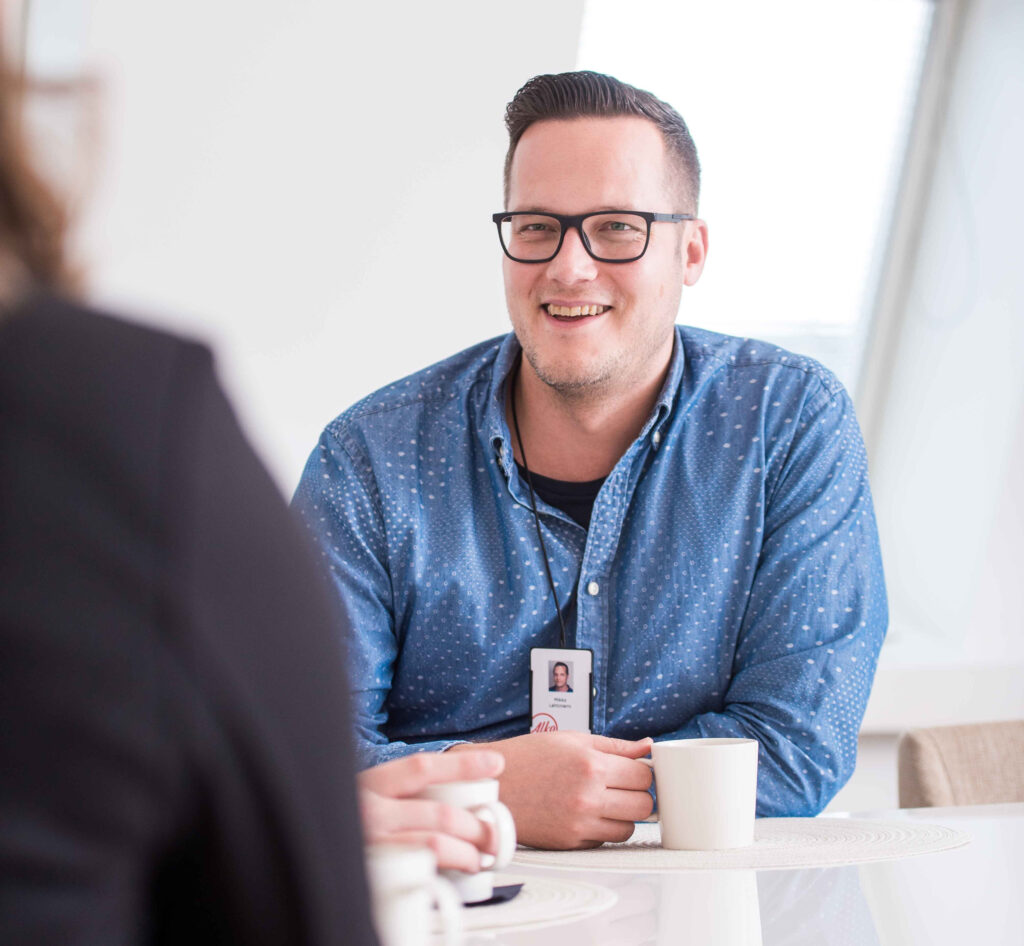
“The feedback highlighted clarity and ease of use. The content of the home screen was highlighted as a development point, so that people can be guided more quickly to current issues,” recalls Mikko Lehtiniemi, Head of Coaching at Alko.
Photo by Vesa Tyni
The digital learning environment is home to all training and coaching and supports a wide range of learners
In 2021, Alko’s own Priima learning environment, called Kupla, was launched and is now home to all training courses. It offers training in responsibility, systems, communication, expertise, team and individual training.
“The bubble has burst among our staff and they are willing to learn from it,” says Lehtiniemi.
The bubble offers content for a variety of learners: basic courses, advanced studies, seasonal training, text-based and activation courses, webinars and team coaching to suit different learning opportunities during the working day.
The aim is to support different types of learning: for example, the most important skills for salespeople, i.e. product demonstrations, are organised as present training, but Kupla provides support material for the training. Kupla also helps people to find their own achievements, learning paths and courses in progress, as well as recommended courses – whether they are repeatable, due, required, open or favourite.
“We are better able to link different forms of education and provide places to learn. Employees can also self-assess their learning, try things out in practice and share their findings at Kupla,” says Lehtiniemi.
Watch our Priima Academy Live with Lehtiniemi, where she talks about ways to identify the ways and needs of early learners and support different learners in their everyday lives.
Learning and induction pathways facilitate the delivery of training
For students, learning is part of their working time and they must spend at least 20 hours a year on self-development. “The type of employment relationship and the level of competence of the person will influence the type of courses required of employees,” says Lehtiniemi.
The learning pathways built into the bubble help workers to understand what kind of training they need to undertake. For example, a basic qualification in customer service teaches salespeople the basics of product knowledge, customer service and responsibility. Some jobs require certain legal obligations to be met, and Bubble offers specific learning pathways for different groups of employees.
“We can also build induction pathways based on personal data. Bubble identifies which personnel group each user belongs to and when they started work, and uses the information to guide them to the right path,” says Lehtiniemi.

An e-learning environment supports knowledge management
In addition, Bubble is a knowledge management tool: frontline staff can recommend courses to their team, guide learning and monitor the implementation of training, for example through reports. The system can also be used to communicate upcoming and overdue training courses.
Seasonal temporary workers also have access to Kupla courses and their attendance is recorded in the system. “Certain courses are linked from the learning platform of our temporary workforce partner to Kupla, where logging in is seamless,” says Lehtiniemi.
The AlkoEdu learning platform, launched alongside the bubble, is intended for use by Alko’s partners, such as suppliers, for sustainability training from the beginning of 2024. “Partners need to have certain standards in place, as sustainability in the supply chain goes both ways. With AlkoEdu, our external partners can work with us in an ethically sustainable way,” says Lehtiniemi.
In addition to learners, the learning platform also supports the work of end-users
Lehtiniemi is part of the Culture and Skills Development team, which is responsible for the planning, implementation and scheduling of all online, face-to-face and distance learning. Although the course content is mainly created by the team’s service and product trainers, each member of the team contributes to the construction of the trainings.
The bubble was created primarily for learners, but Lehtiniemi says that as the main user he also wanted an easy-to-use system. Ready-made course templates help with content production, and the instructions go through what is needed to build a course. Lehtiniemi is happy that the creation of training courses can be delegated to the rest of the organisation, leaving their teams to check the settings and tweak the pedagogy.
“We also have vendors who train alongside their own work, who traditionally hold live training sessions. They have had the opportunity to practice online pedagogy and many of them are enthusiastic about doing online training. This speaks volumes about the ease of use of the Bubble,” he says with a smile.

Cooperation praised for informed dialogue on the development of the learning environment
“Our cooperation and dialogue with the Saarni Learning team has been excellent. I like the fact that the learning environment is developed for all clients, and is not tailor-made for us. This brings operational reliability to Kupla,” says Lehtiniemi.
In spring 2024, a learning diary will be developed to help make learning more goal-oriented, and to share knowledge and insights with both the pre-person and the team. There are also plans to make better use of analytics and artificial intelligence for system development and to support different types of learners.
Lehtiniemi appreciates that not every wish is implemented as such, but that ideas for development are thought through together. “We define the objectives together and I am even suggested a better solution than my original idea. It’s good that the customer’s opinions are listened to and valued, but only the sensible ones are taken to implementation,” she laughs.
Do you want to know how Priima could fit your business needs? Contact us!